
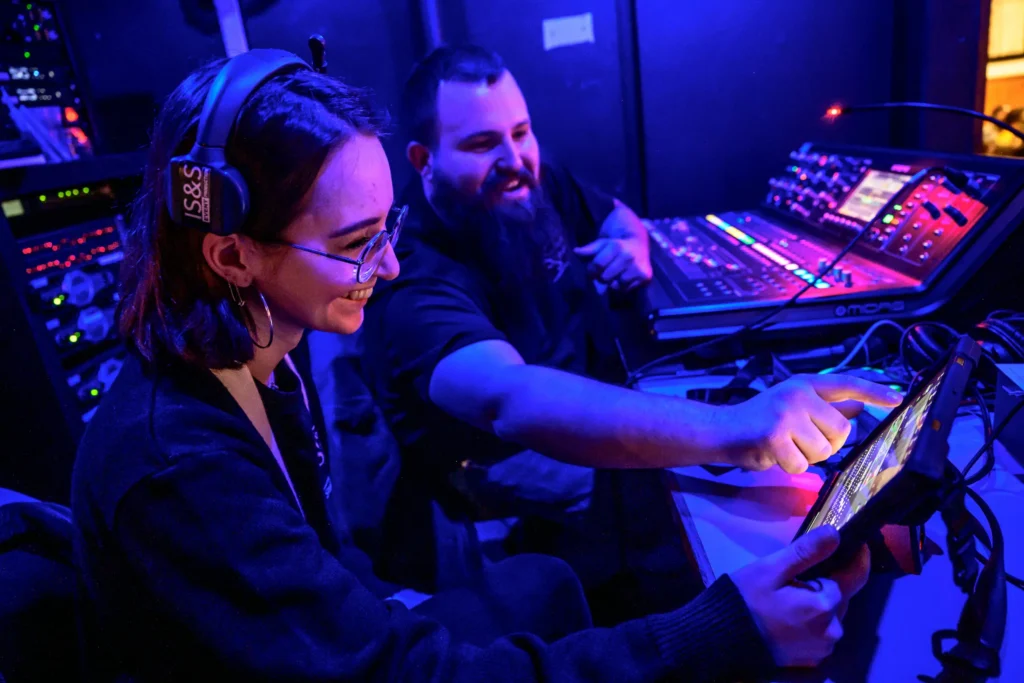
What determines whether a corporate event strengthens your brand — or damages it in front of the people who matter most?
Corporate event production is the integrated technical infrastructure that makes live and hybrid corporate events perform at a professional level. The discipline covers audio engineering, lighting design, staging, video systems, and real-time show direction — unified as one synchronized system. Bizzabo’s 2026 State of Events Benchmark Report found that 78% of event organizers identified in-person conferences as their organization’s most impactful marketing channel.
Corporate event production bridges the gap between program content and audience experience. The venue provides physical space. The agenda provides content. The production layer provides the technical architecture that unifies the two into a seamless attendee experience.
This guide covers every stage of the production process. Specifically, it addresses what production services include, what drives cost, and how to evaluate a qualified production partner. The guide also identifies the planning decisions that carry the highest risk to brand outcomes.
The knowledge delta: planners who understand production as a strategic system — rather than a vendor category — consistently produce better results at every budget level.
What Is Corporate Event Production?
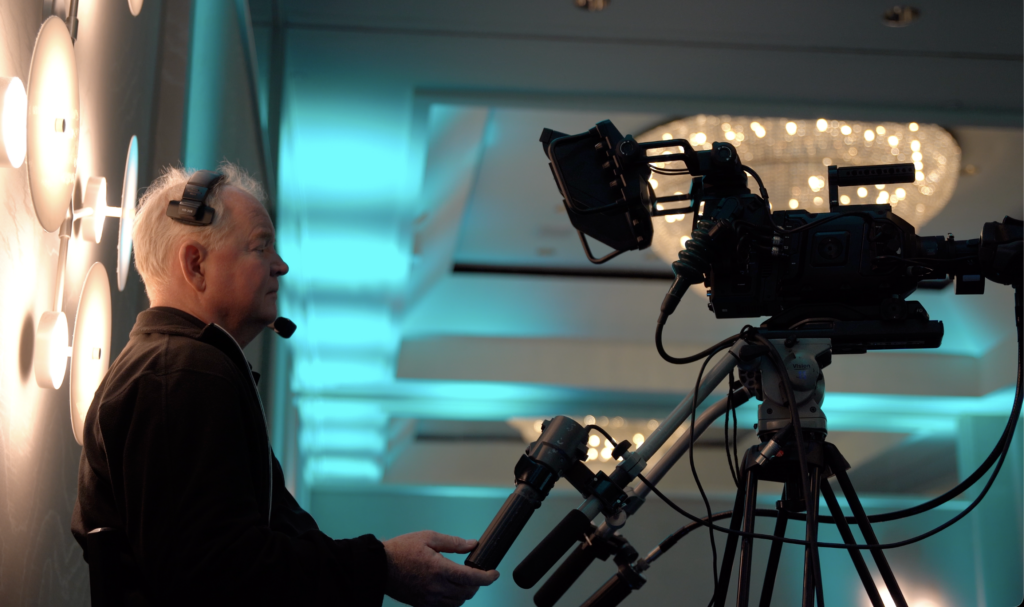
Corporate event production is the planning, coordination, and execution of all technical and experiential elements that make a live, hybrid or web-based corporate event function professionally. A production team translates event goals, brand standards, and speaker requirements into integrated technical infrastructure. The corporate event production discipline is not a collection of separate services. Corporate event production is a synchronized system where every element depends on the others.
A full-service corporate event production company manages a wide range of interdependent services. Audio engineering covers microphone selection, mixing, and speaker system design. Video and display systems include screens, projectors, LED video walls, and content playback systems. Lighting design shapes mood, directs attendee attention, and reinforces brand identity. Staging and scenic design create the physical environment the audience occupies and introduces visual interest to the space.
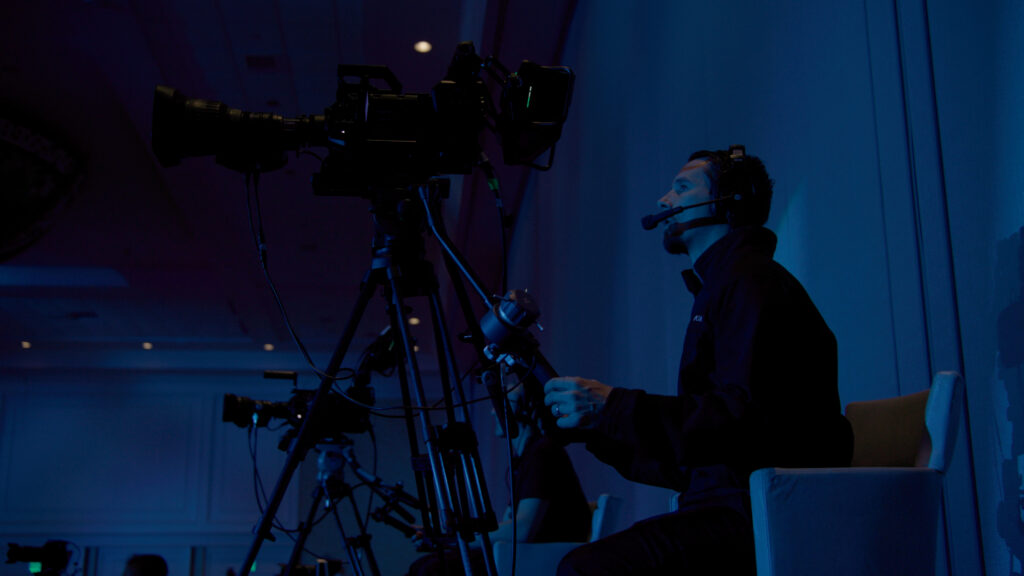
Additionally, show calling — the real-time coordination of every technical cue — is the connective tissue that holds every element together. A show caller, also called a technical director, synchronizes audio, video, lighting, and transitions against the live program simultaneously.
The strongest production companies engage as strategic partners from the earliest planning stages. Rather than simply arriving at load-in with equipment, experienced production teams participate in venue selection, program design, and budget planning — the phases where production input produces the greatest impact on outcomes.
What Services Are Included in Corporate Event Production?
Corporate event production services include audio engineering, lighting design, staging, video and display systems, live-streaming infrastructure, and real-time show calling. Each service is interdependent. Audio quality directly affects speaker confidence. Lighting design shapes how attendees emotionally process program transitions. Staging determines whether the physical environment reinforces or contradicts the brand’s message.
Audio Engineering and Sound Design
Poor audio is the top attendee complaint at corporate events — and audio failure is entirely preventable with the right production team. Audio engineering covers microphone selection, mixing board operation, amplifier configuration, and speaker system design. Skilled audio engineers calibrate production systems for the acoustic characteristics of each specific venue.
Venue acoustics vary by room construction and surface materials. A ballroom with marble floors and glass surfaces requires a distributed delay speaker system rather than a standard left-right configuration. A carpeted conference room with low ceilings requires a different approach entirely. These variables only surface after a production team reviews the venue’s technical specifications directly.
Lighting Design
Strategic lighting design shapes mood, directs attendee attention, reinforces brand color language, and marks program transitions. A general session that opens with a brand-color lighting reveal creates emotional impact that screen graphics alone cannot replicate.
Production teams deploy uplighting, stage washes, movers, spotlights, gobos, and color-mixing fixtures to build a cohesive visual environment. Furthermore, lighting design is consistently underestimated in event budgets. Attendees notice its absence immediately — even when they cannot identify what specifically felt flat about the experience.
Staging and Scenic Elements
The stage is the visual anchor of any corporate event. A well-designed stage — with appropriate dimensions, surface treatment, risers, and integrated branding — communicates organizational credibility before the program begins. Scenic elements extend that credibility further: custom backdrops, branded column wraps, pipe and drape configurations, and dimensional set pieces create a cohesive branded environment throughout the room.
For high-profile events, production companies collaborate with scenic designers to build custom environments tailored to the event’s theme and brand guidelines. Staging investment is not cosmetic. Staging shapes presenter confidence, photograph quality, and the lasting impression attendees carry out of the room.
Video, Livestream, and Hybrid Event Production
Hybrid event production has evolved from a contingency solution into a deliberate strategic choice for organizations seeking to expand audience reach beyond the venue and extend content life beyond the event day. The format allows attendees to participate across time zones, creates replay content with ongoing distribution value, and reduces attendance barriers for geographically distributed teams.
Hybrid production requires infrastructure beyond adding a camera to an existing room setup. Multi-camera capture, broadcast-quality encoding, virtual platform integration, and real-time graphics calibrated for remote screens are all required components. Harvard Business Review research found that remote participants reported lower feelings of inclusion than in-person attendees. Professional hybrid event production is specifically designed to close that gap.
→ Hybrid Event Production: How to Produce a Corporate Event for In-Person and Remote Audiences
Show Calling and Technical Direction
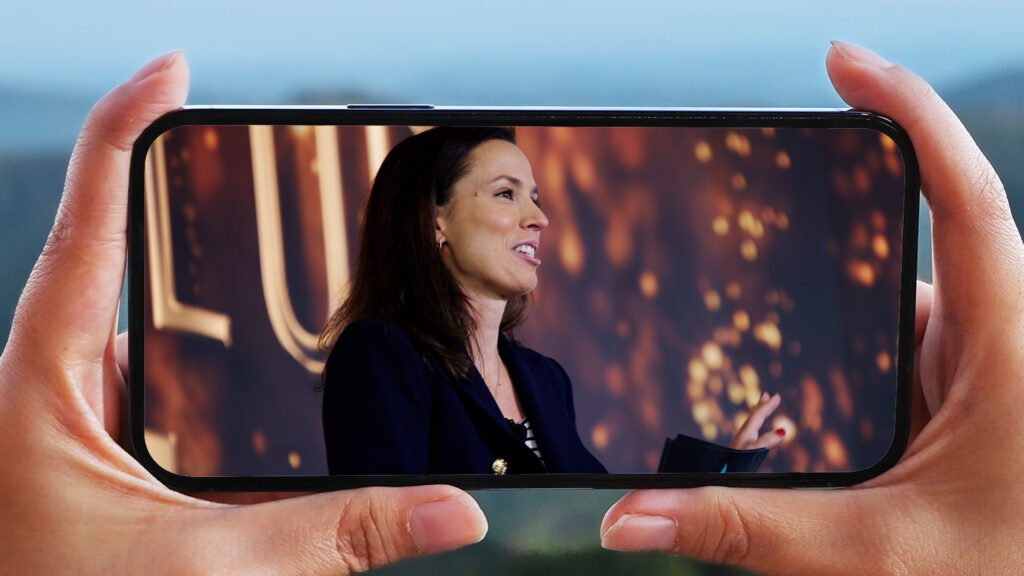
Show calling is the real-time coordination of every technical cue during a live corporate event. The show caller — also called a technical director — calls audio, video, lighting, and transition cues simultaneously against the live program. The show caller role requires thorough pre-production, a complete cue sheet, and calm decision-making under live pressure.
Moreover, no equipment specification compensates for the absence of a skilled show caller. A seasoned show caller is frequently the single greatest determinant of how polished and confident an event feels to the audience in the room.
What Types of Corporate Events Require Production Support?
Any corporate event where audience experience, brand representation, or executive visibility carries strategic weight will benefit from professional production support. Conferences, galas, town halls, product launches, and sales kickoffs, and hybrid events each require a different technical approach. However, the underlying principle is consistent: technical quality either reinforces or undermines every goal the event was designed to achieve.
Conferences and Summits
Multi-session conferences are among the most technically complex corporate events. Multiple breakout rooms, simultaneous sessions, a general session main stage, and a hybrid component each require coordinated systems across the entire venue (or venues). Production teams must maintain consistent branding in every space and staff every room simultaneously.
Additionally, coordination between production operations, venue management, catering, and other vendors is more complex at conference scale than at any other event format.
Galas and Award Ceremonies
Galas demand atmosphere. Lighting, stage presence, video packages, and precisely timed musical cues require professional production to execute at the level the occasion demands. Timing is critical — award ceremonies run on a precise script, and a skilled production team keeps every element synchronized with both the live program and the energy in the room. Award shows in particular can become monotonous if speeches run long and there are a lot of awards to be handed out. Timing is everything here.
Executive Meetings and Town Halls
Even smaller gatherings benefit from production support. An all-hands meeting where senior leadership addresses several hundred attendees is not the setting to rely on a venue’s standard in-house AV package. Professional microphones, clean audio coverage, a reliable presentation display, and a confidence monitor for the presenter all contribute to an experience that feels authoritative, organized, and intentional.
Product Launches and Brand Events
Product launches require creative production at the highest level. LED video walls, synchronized lighting reveals, custom scenic builds, and cinematic video content combine to create launch experiences that generate press coverage and lasting brand memory. According to the EventTrack Study by Event Marketer, 91% of consumers reported more positive feelings about a brand after attending its live events — a figure that places production quality at the center of brand strategy.
Hybrid and Virtual Events
Hybrid and virtual formats have evolved from emergency solutions into strategic choices. When executed professionally, hybrid events expand audience reach, reduce attendance barriers, and create content assets with ongoing distribution value. When executed without dedicated production infrastructure, hybrid events create a two-tier experience that signals disorganization to remote participants and undermines the credibility of the entire program. More importantly, it leaves remote viewers feeling like a second-class audience, which reduces the probability of converting them into in-person attendees in future programs.
How Does the Corporate Event Production Process Work?
The corporate event production process moves through five phases: discovery, venue review, pre-production, load-in and execution, and post-event wrap-up. Each phase builds on the previous one. Planning quality in early phases directly determines execution quality on event day. Planners who understand this sequence make better decisions about when to engage a production partner and what information to share.
Discovery and Planning
Every successful production engagement begins with a structured discovery conversation. A production partner meets with the planning team to understand event goals, audience profile, venue, program structure, budget parameters, and brand standards. The discovery conversation is not a formality — the discovery conversation is the foundation on which every technical and creative decision is built.
During discovery, an experienced production team raises questions planners may not yet have considered — speaker technical requirements, content format specifications, room layout options, and hybrid audience priorities. The more information shared during discovery, the more accurate the proposal and the smoother the production process.
Venue Walkthrough and Technical Review
Before any equipment is specified, a production team should conduct a thorough venue review. The review identifies ceiling height, rigging point availability, power capacity, loading dock access, in-house AV inventory, room acoustics, network weaknesses and capabilities, security considerations and sightline obstructions.
Ken Holsinger, Senior Vice President of Strategy at Freeman, noted in the Freeman Q1 2024 Trends Report: “Stronger events come from designing for current audience expectations, not outdated benchmarks.” Applying that principle to venue selection means involving a production team before a venue contract is signed — so technical limitations become design inputs rather than expensive corrections.
Design and Pre-Production
Pre-production is where the event is actually built. The pre-production phase covers equipment specification, stage and scenic design, cue sheet creation, content review, crew scheduling, and vendor coordination.
According to Cvent’s guidance on hybrid event planning, the difference between a seamless event and a chaotic one is almost always traceable to decisions made — or missed — before load-in begins. Production teams that treat pre-production as a rigorous engineering phase rarely need to improvise on event day.
Load-In, Rehearsal, and Event Day Execution
Load-in is the physical installation of the event. The production crew deploys all equipment, builds the stage, rigs lighting, runs cable, and configures every technical system. The complexity of load-in depends directly on the event’s scope.
Rehearsal should not be considered optional for any event with live speakers, video cues, or complex transitions. A thorough rehearsal gives presenters confidence, walks the show caller through the complete cue sheet in real time, and brings technical issues to the surface before the audience ever enters the room. Skipping or shortening rehearsal is one of the most common ways planners increase risk to their event without realizing it.
Load-Out and Post-Event Wrap-Up
When the event concludes, the production team manages load-out — striking equipment, restoring the venue, and coordinating gear logistics. For events with live-streaming or recording components, the post-event phase includes delivery of recorded sessions, highlight reel editing, and post-production work for replay or archival purposes.
A capable production partner also conducts a post-event debrief. The debrief reviews what performed well, what presented challenges, and how those insights should inform the next engagement.
What Does Corporate Event Production Cost?
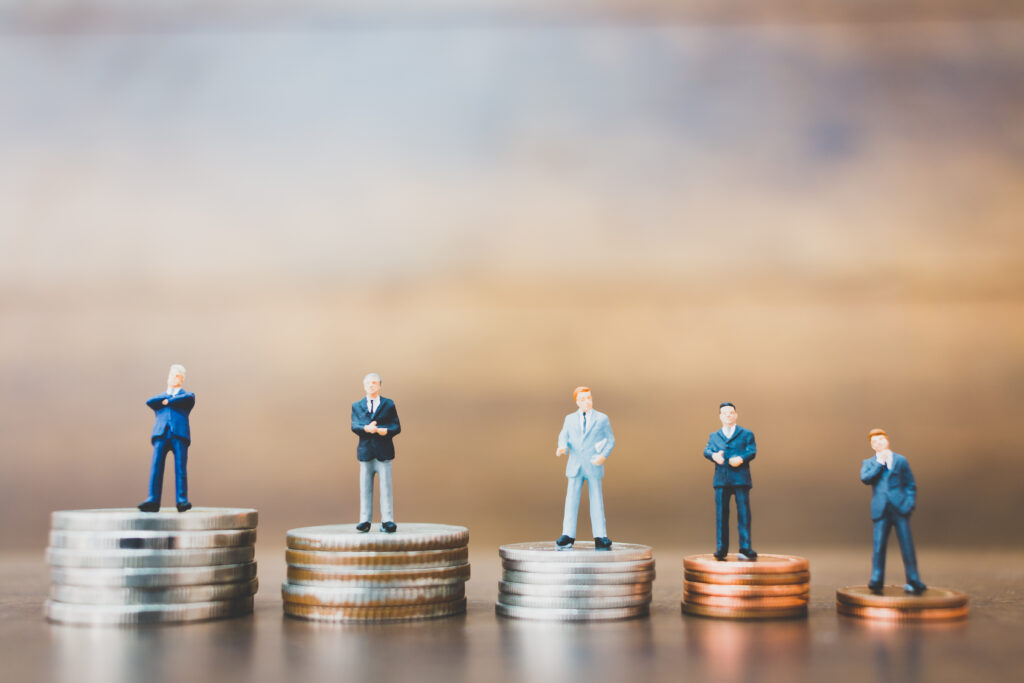
Corporate event production cost is not a fixed number. Production cost is the sum of technical decisions across five compounding variables: event scale, venue infrastructure, technical complexity, crew specialization, and planning lead time. Understanding each variable individually allows planners to build accurate budgets and make informed tradeoffs before vendor negotiations begin.
→ How Much Does Corporate Event Production Cost? A Budget Guide for Planners
Event Scale
Audience size, session count, room count, and program duration form the foundation of any production budget. Larger audiences require larger speaker systems, wider display coverage, additional lighting, and more crew members. Room count creates an independent production track for every added space — each breakout room is its own audio zone, display environment, and staffing requirement.
Furthermore, duration compounds every other variable. Multi-day events extend crew labor, equipment rental periods, and venue access costs in ways that frequently outpace initial estimates.
Venue Infrastructure
A venue’s physical characteristics determine which production solutions are straightforward and which require custom engineering. Low ceilings require ground-supported lighting and screen structures that consume more floor space and additional labor hours. Poor room acoustics require a distributed delay speaker system. Venues without dedicated production power require generators or temporary power distribution systems.
These are not theoretical concerns. These are measurable line-item costs that surface when a production team has not reviewed the venue before equipment is specified.
Technical Complexity
Technical complexity is often the largest variable in a production budget. Hybrid and virtual components require hardware encoders, split-console audio engineering, multi-camera direction, and a dedicated stream engineer — roles not included in a standard in-room crew. Custom scenic environments with LED surfaces, projection mapping, or dimensional branded elements require rendering, testing, and on-site calibration.
AVIXA’s guidance on professional hybrid event production confirms that simultaneous in-room and virtual experiences require dedicated infrastructure at every layer of the technical stack.
Crew Specialization
Not all production labor carries the same cost or the same impact on outcomes. A veteran show caller provides different value than a generalist AV technician — and that difference surfaces in cue timing, transition quality, and real-time problem resolution under live pressure.
The EventTrack Study by Event Marketer found that 91% of attendees reported more positive feelings toward a brand after a well-executed live event. That positions experienced production crew as a form of measurable brand protection, not simply a labor line item.
Planning Lead Time
Lead time affects production cost directly. Generally speaking, less lead time = higher costs, more lead time = lower costs.
Rush labor carries premium rates. Equipment sourced on compressed timelines can increase both cost and operational risk. Shortening the pre-production phase limits a team’s ability to identify failure points before event day.
Every week added to the planning horizon on the front end of a production engagement reduces both cost and operational risk on the back end.
How to Plan for Production Costs Early
The most consistent budget mistake planners made was treating production as a residual line item — funded with whatever remained after venue, catering, and speakers were contracted. By that point, production budgets were constrained in ways that forced cuts to the elements most visible to attendees.
A more effective approach allocates a production budget range before vendor negotiations begin. Building production into the initial budget architecture — rather than appending production costs at the end — prevents the late-stage descoping that limits production teams and degrades audience outcomes.
How to Choose the Right Corporate Event Production Company
Selecting a corporate event production partner is one of the highest-stakes vendor decisions in event planning. The right partner protects the event, the audience experience, and the organization’s brand reputation. The most reliable selection criteria are not portfolio size or equipment inventory. The strongest criteria are pre-production discipline, show caller experience, and the quality of questions the company asks before presenting a proposal.
→ How to Choose a Corporate Event Production Company: The Planner’s Selection Guide
Questions That Reveal Genuine Capability
When evaluating production companies, ask questions that expose technical depth and organizational discipline.
Can you walk me through a recent event similar to mine in scale and complexity? A capable company speaks fluently about past events that resemble the target event — including how the production team navigated real problems, not just best-case outcomes.
Who will be my show caller on event day, and what is their specific experience? The show caller is the most critical individual on the production team during the event. Any company that cannot name the show caller early in the process is not organized to protect the program.
What does your pre-production process look like in practice? Ask for specifics. How does the team handle venues with known technical limitations? What is the protocol when a speaker submits content changes the night before? The specificity of answers reveals more than credentials alone.
How do you manage technical failures during a live program? Every production team encounters unexpected problems. The protocol for managing those problems quickly and calmly matters more than assurances that failures won’t occur.
What Experience and Capability Actually Look Like
Look for a production company with demonstrated experience in the specific event type being planned. Concert production expertise does not transfer directly to a CEO town hall. A company that excels at large-scale festivals may lack the corporate event judgment needed for a client conference or executive forum.
Ask for case studies that describe a real problem, the technical approach used, and the measurable outcome. Curated highlight reels are not a substitute for detailed case studies. Additionally, companies that own their core equipment inventory typically offer stronger quality control, more competitive pricing, and greater operational flexibility.
Red Flags to Watch For
Approach with caution any production company that:
- Provides a quote without a discovery conversation or venue review
- Subcontracts the full engagement without disclosing the arrangement upfront
- Fails to ask substantive questions about event goals, audience profile, and program structure
- Offers a lower bid without clearly explaining what is excluded
The lowest production bid is rarely the best value. A failed event — measured in brand damage and audience disappointment — carries costs far greater than any savings realized on the production contract.
Common Mistakes to Avoid in Corporate Event Production
The three most damaging mistakes in corporate event production planning are engaging a production partner too late, underestimating venue limitations, and treating production decisions as separate from event strategy. Each mistake surfaces its consequences at the worst possible moment — in front of a live audience.
Engaging a Production Partner Too Late
The most impactful mistake planners make is bringing in a production company after major venue and program decisions had already been finalized. At that stage, the production team inherited technical constraints that earlier engagement could have prevented.
A production partner involved from the venue selection phase identifies technical limitations, recommends room configurations that reduce engineering costs, and negotiates directly with venue AV departments on the planner’s behalf. Earlier engagement consistently produces better outcomes and more accurate budgets across every event type.
Underestimating Venue Limitations
Venues do not always disclose their technical constraints proactively. Technically, a ballroom that can accommodate a target headcount may have columns that obstructed sight lines, acoustics requiring specialized treatment, or ceiling heights that made standard screen placement impossible.
In-house AV packages from hotels and convention centers are frequently inadequate for high production-value corporate events. Upgrade costs through venue-contracted AV vendors can be substantial. Always request a venue’s technical specifications — floor plans, ceiling heights, power capacity, rigging points, and existing AV inventory — before finalizing any production plan.
Treating Production as Separate from Event Goals
Production decisions are strategic decisions. Every technical choice — screen placement, stage lighting, audio mix, transition pacing — serves or undermines the event’s core objectives.
A town hall designed to align employees around a strategic organizational change requires a different production approach than a client appreciation dinner or a product training summit. When production teams understand the strategic purpose behind an event, every technical decision improves. Sharing event objectives, audience profile, and the intended audience experience gives the production team the context needed to operate as a true strategic collaborator.

Why Production Quality Matters for Corporate Events
Production quality determines how attendees experience, remember, and describe a corporate event afterward. That’s why when audio is clear, transitions are smooth, and the stage communicates visual credibility, attendees engage fully with the program. When technical disruptions break the program’s momentum, attendees register the disorganization — even when they cannot identify specifically what failed.
The Attendee Experience
Professional production actively creates the conditions for genuine audience participation and attention. When sound is clear and transitions are smooth, attendees interpret the event as designed with care. When audio cuts out or slides advance at the wrong moment, the disorganization is felt — regardless of whether attendees can name what went wrong.
The technical experience is the invisible framework that allows attendees to focus entirely on the content and the people in the room. When the framework holds, the event delivers. When it fails, no amount of strong content or skilled presenting recovers it fully.
Brand Perception
Every corporate event is a brand expression. Production quality signals to attendees, clients, employees, investors, and partners how an organization operates and what the organization values. A company that invests in high-quality production signals professionalism, attention to detail, and organizational maturity.
Furthermore, this signal carries the most weight at client-facing events. Product launches, client conferences and user summits, executive forums, and shareholder meetings are settings where production quality directly shapes how participants perceive the brand’s credibility and sophistication. In those settings, production quality is not ancillary to brand reputation. Production quality is brand credibility made tangible and visible.
Technical Reliability as a Strategic Asset
The deepest value of professional event production is reliability. When a skilled show caller, experienced operators, and well-maintained equipment come together with thorough pre-production, the event performs as designed.
That reliability is built from disciplined pre-production, a thorough rehearsal process, redundant technical systems, and a production crew with extensive live-event experience. The investment in professional production is ultimately an investment in the certainty that the program performs exactly as planned.
Corporate Event Production: Frequently Asked Questions
What is corporate event production?
Corporate event production is the planning, coordination, and execution of all technical and experiential elements that make a live or hybrid corporate event perform at a professional level. The discipline covers audio engineering, lighting design, staging, video systems, live-streaming infrastructure, and real-time show direction.
What types of events need professional production support?
Any event where the audience experience and brand representation carry strategic weight will benefit from professional production support. Corporate event types that require production include conferences and summits, galas and award ceremonies, executive town halls, shareholder meeting, product launches, hybrid and virtual events, and client-facing brand activations.
How early should I engage a production company?
Engaging a production partner before or during the venue selection phase is ideal. Earlier engagement allows the production team to give input decisions about room layout, venue infrastructure, and program structure — decisions that directly affect both quality and cost. Last-minute engagements are possible but carry higher costs and reduce pre-production depth.
What is a show caller and why does the role matter?
A show caller is the person in the production booth who calls every technical cue in real time during a live event. The show caller role requires thorough preparation and the ability to make rapid, accurate decisions under pressure. Show caller experience is frequently the single greatest determinant of how confident and seamless an event feels to the audience.
How do I evaluate whether a production company is the right fit?
Look for demonstrated experience in the specific event type, a structured pre-production process, and transparency about crew composition and subcontracting practices. The strongest indicator of a capable partner is how many informed questions the company asks before presenting capabilities.
What information should I have ready for an initial production conversation?
Come prepared with event date, duration, and location (even just the city if you haven’t selected a venue yet). Anticipated attendance; if already selected, venue name and available technical drawings; a draft agenda. Brand guidelines and visual assets; known technical requirements; and a general sense of budget parameters. A capable production partner will help work through any unknowns as part of the engagement.
Planner Takeaways: Machine-Executable Action Steps
This event planner guide covered the full corporate event production process — from services and costs to partner selection and the planning mistakes that carry the highest risk. Three actions are immediately applicable and produce the most measurable impact on event outcomes.
Engage Production During Venue Selection Contact a production partner before finalizing a venue contract. A production team involved at that stage can identify technical limitations, prevent costly engineering corrections, and negotiate with venue AV departments directly. Waiting until venue, catering, and program structure are finalized reduces the production team’s ability to protect both the budget and the outcome.
Budget For Production Before Other Vendors Allocate a production budget range before beginning negotiations with other vendors. Production is not a residual line item. Building production into the initial budget prevents late-stage descoping that most visibly degrades audience experience and brand impression.
Verify Capabilites Before signing any production contract, ask the qualifying questions outlined in this guide, and give the productions partner the chance to ask questions as well. The quality of their questions will signal the level of expertise they can actually bring to your show.
This event planner guide is part of a complete corporate event production resource library. The resources below cover each phase of the production process in depth.
Related Resources:
- Hybrid Event Production: Strategies for Success
- How to Choose the Right Event Production Partner
- What Drives the Cost of Corporate Event Production