
Do you need a photographer, a video team, or both at your next corporate event?
Photos give you volume and speed for recaps, decks, and social posts. Video gives you energy, sound and motion.
But event video comes in two main forms: the recording to document the onstage event itself, and creative footage to show the attendee experience. Booking one and expecting both is the most common miss.
Planners often treat the choice as a budget call, but it’s more useful to think of it as a content decision. This guide covers what photo delivers, why video splits into two separate roles, and how staffing and lighting decisions follow from both.
What Photo and Video Each Deliver
Photos deliver volume and speed. A photo crew produces dozens of usable frames per hour, ready for social posts, recap emails, and next year’s promo. Video delivers a more dynamic visual experience.
Only video keeps the keynote as it was spoken, which is what turns one session into a year of reusable content.
Photo output scales with hours booked. PhotoWorkout’s event photography guide puts a normal delivery at 50 to 100 edited images per hour. Corporate events tend to land at the low end of that band. Set the expected count in writing before the event.
Photos move fast after the event. A photo crew can hand off select shots the same day for social. That speed makes photo the better fit when your team needs content while the event is still live.
Video is the only format that keeps the words. A keynote, a panel, and an award speech all lose most of their value as a still frame. If you want the content reusable, someone has to record the audio and the motion.
Event Video Is Two Jobs, Not One
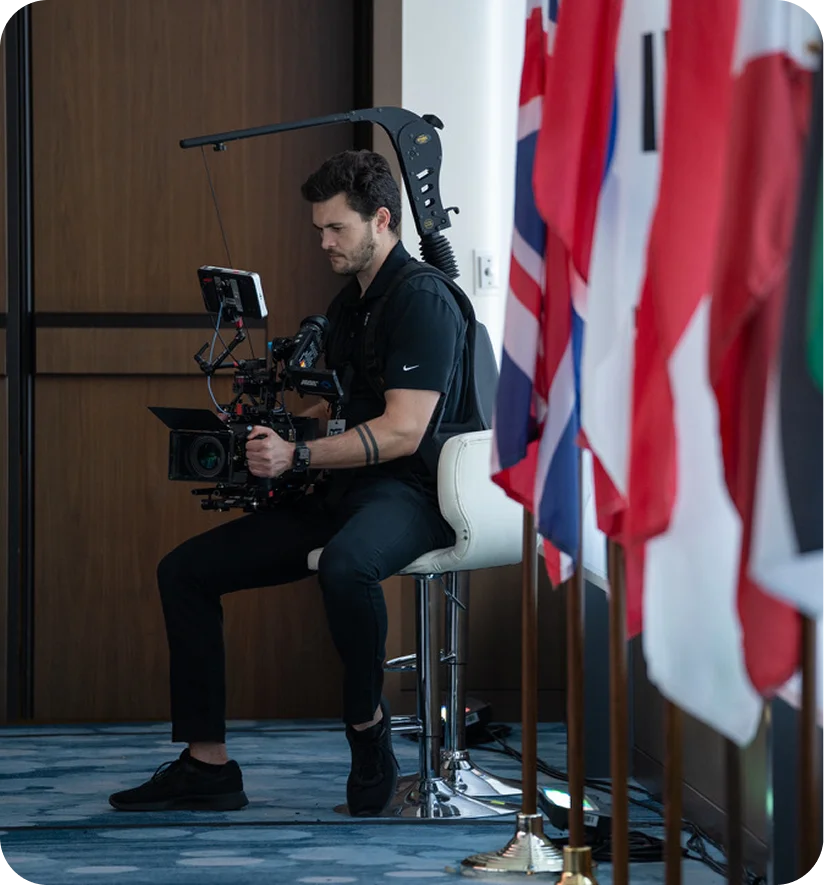
Program capture and roaming coverage are two roles with two sets of gear. A locked camera pointed at the stage records the session for streaming and archive. A roaming crew gathers b-roll, candid moments, and interviews. A recap reel needs both, and one camera cannot do both at once.
Program capture stays put. The stage camera(s) holds a clean, steady frame on the speaker and pulls audio from the board. That feed serves your livestream, your session archive, and your speaker soundbites. The crew stays in place for the whole session.
Roaming coverage is what a recap reel is built from. B-roll means the supporting footage cut around the main shots. Attendees walking in. Hands on a product demo. A room reacting to a reveal. Wide shots of the stage look. None of that comes from a stationary camera on the main stage.
A recap video without b-roll is just a short keynote. If you want a highlight reel your team can use, someone has to be off the tripod all day. Ask if your video quote covers a roaming crew, or only the stage camera.
Interviews need their own plan. Short attendee and exec interviews are among the most reusable assets an event makes. They need a quiet corner, good light, and a mic. Build that space into the floor plan, rather than hunting for one on show day.
FAQ
Should I book photo, video, or both? Book both if the event has a keynote, panel, or awards worth reusing. Book photo alone if you mainly need images for social and recaps. If you want a highlight reel, make sure the video quote covers roaming coverage, not just the stage camera.
What is b-roll and why does it matter? B-roll is the extra footage cut around your main shots: arrivals, demos, reactions, room mood. A recap reel built without it plays as a trimmed keynote. Getting b-roll takes a crew moving through the room all day.
Can one person shoot both photo and video? In theory, yes – but there’s a reason professionals don’t do it. Each switch costs you time, and the gear required is not identical for the two jobs. For any event with a stage program, staff the roles separately to get the most out of each format.
Internal Sources: