
What is Pepper’s Ghost?
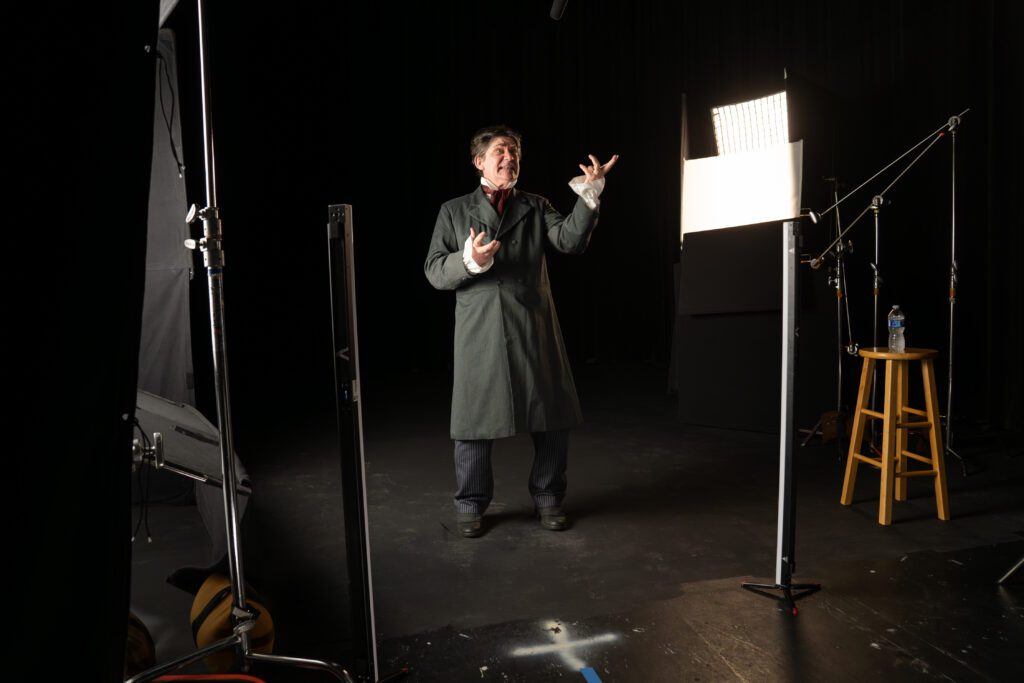
Often marketed as a cutting-edge stage technology — from the famous Tupac Shakur appearance at the Coachella Valley Music and Arts Festival to keynote speakers “beaming in” from another city — Pepper’s Ghost is actually a theatrical illusion that dates back to the Victorian era.
The effect was popularized in 1862 by stage scientist John Henry Pepper. It uses a transparent surface positioned between the audience and the stage to reflect a hidden image source, creating the illusion that a person or object exists physically in the performance space.
According to theatre scholar Beth A. Kattelman, the illusion’s nineteenth-century theatrical origins explain why modern implementations still depend heavily on careful staging, lighting control, and optical alignment. While modern projection and LED technology have improved image quality, the fundamental optical principles behind Pepper’s Ghost remain unchanged.
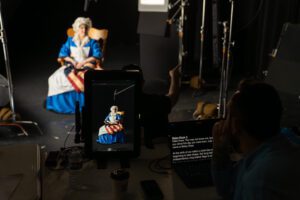
In modern event production, the transparent surface may be glass, acrylic, or a tensioned polymer film. A bright video source — typically a projector or LED wall — is hidden out of the audience’s direct sightline. When light from that source reflects off the angled surface, viewers perceive a virtual image that appears to stand within the physical stage environment.
How Pepper’s Ghost Works
The illusion relies on the law of reflection, which states that light reflects from a surface at the same angle at which it arrives.
In most professional setups, the transparent surface is positioned at roughly a 45-degree angle relative to both the audience and the hidden image source.
The illusion works through three simple steps:
- The Source: A video image is displayed on a screen positioned either below the stage, above it, or off to the side, hidden from the audience’s direct line of sight.
- The Reflection: Light from the screen strikes the transparent surface. Because the material is partially reflective, some of that light bounces toward the audience.
- The Perception: The human eye traces that reflected light backward, creating the illusion of a virtual image located behind the glass.
The Three Non-Negotiables
1. Geometry
Pepper’s Ghost setups are extremely sensitive to alignment. Small shifts in the angle of the reflective surface or the placement of the source screen can move the virtual image several inches. If alignment is off, the figure may appear to float above the floor or sink into the stage.
2. Contrast
The reflected image is always dimmer than the original source. Ambient light therefore becomes the biggest enemy of the illusion. If stage lighting spills onto the reflective surface or onto the black areas surrounding the projection content, the glass becomes visible and the ghost appears washed out.
3. Viewing Angles
Pepper’s Ghost only works within a defined viewing cone. Audience members sitting too far off-axis may see the edges of the reflective surface or the hidden source screen.
For hybrid events, cameras must also remain inside this viewing zone to avoid revealing the illusion’s mechanics.
Go / No-Go Decision Table
Before pitching a Pepper’s Ghost installation to aclient or event stakeholder, run through this practical checklist.
| Requirement | Critical Constraint | Priority | If Not Met |
|---|---|---|---|
| Light Control | Room must dim and eliminate stage spill | Critical | The ghost appears washed out and translucent |
| Sightline Control | Audience must remain within viewing cone | Critical | Audience may see glass edges or the hidden source |
| Floor Space | Stage depth needed for glass rig and source pit | High | Rig blocks sightlines or becomes a safety hazard |
| Setup Time | Several hours required for alignment and masking | Critical | Visible double reflections or image misalignment |
Building a Professional Setup
Surface Choice: Optics vs Practicality
- Glass: Highest optical clarity and most stable reflections. Ideal for permanent installations but heavy and fragile.
- Rigid Acrylic: Lighter and safer to transport, but prone to bowing, which can distort reflections.
- Tensioned Film: Ultra-thin polymer film used for large-scale stage illusions exceeding 30 feet.
The Source: Projector vs LED Wall
Projectors provide high resolution and are easier to hide within stage architecture. However, they often struggle with brightness because significant light is lost during reflection.
LED walls have become the preferred option for modern productions because they deliver far greater brightness. This helps maintain contrast even in imperfect lighting environments.
Content Design: The “Pure Black” Rule
Content for Pepper’s Ghost must be created against a true black background. In reflection-based illusions, black effectively becomes transparent.
If a video background uses dark gray instead of black, the audience will see a faint rectangle floating in the air.
Professional production teams typically:
- film subjects against pure black backgrounds
- use rim lighting to define edges
- avoid background gradients
- maintain strong contrast in footage
The Human Element
Even the best technical setup will fail if the performance is poorly choreographed. When a live presenter interacts with a virtual figure, precise stage marks are required.
If a presenter attempts to shake a holographic hand and misses by several inches, the illusion breaks instantly.
Audio localization also improves realism. Placing hidden speakers near the virtual image helps the brain perceive that the voice is coming from the figure rather than from overhead speakers.
Pepper’s Ghost in Hybrid Events
Hybrid events introduce an additional challenge: designing the illusion for both the in-room audience and cameras.
The live audience perceives depth and spatial positioning, but cameras flatten the illusion into a two-dimensional image.
To maintain realism on camera:
- place cameras within the viewing cone
- avoid angles that expose the reflective surface
- mask LED reflections carefully
Frequently Asked Questions
Can Pepper’s Ghost work outdoors?
Outdoor environments are extremely difficult because ambient light destroys contrast. High-brightness LED sources and controlled shading structures are required.
What is the most common reason the illusion fails?
Lighting spill onto the reflective surface is the most frequent cause of failure.
Which reflective material is best?
Glass provides the best optical clarity, acrylic is portable, and tensioned film enables very large stage illusions.
Internal Resources
If you’re planning a production, explore our related resources:
Works Cited
Kattelman, Beth A. “Spectres and Spectators: The Poly-Technologies of the Pepper’s Ghost Illusion.” Theatre, Performance and Analogue Technology, Springer/Palgrave. https://doi.org/10.1057/9781137319678_11