
What happens when a national nonprofit takes on its first major training conference with limited staff, a shifting timeline, and 40+ organizations counting on them to get it right.
When the Florida State Legislature launched the Responsible Fatherhood Initiative — a multi-million dollar program designed to empower dads across the state — they turned to Family First to lead it. Family First, a national nonprofit founded in 1991, had more than thirty years of experience helping families thrive. Furthermore, they had the mission, the credibility, and the mandate. What they didn’t have was an event partner.
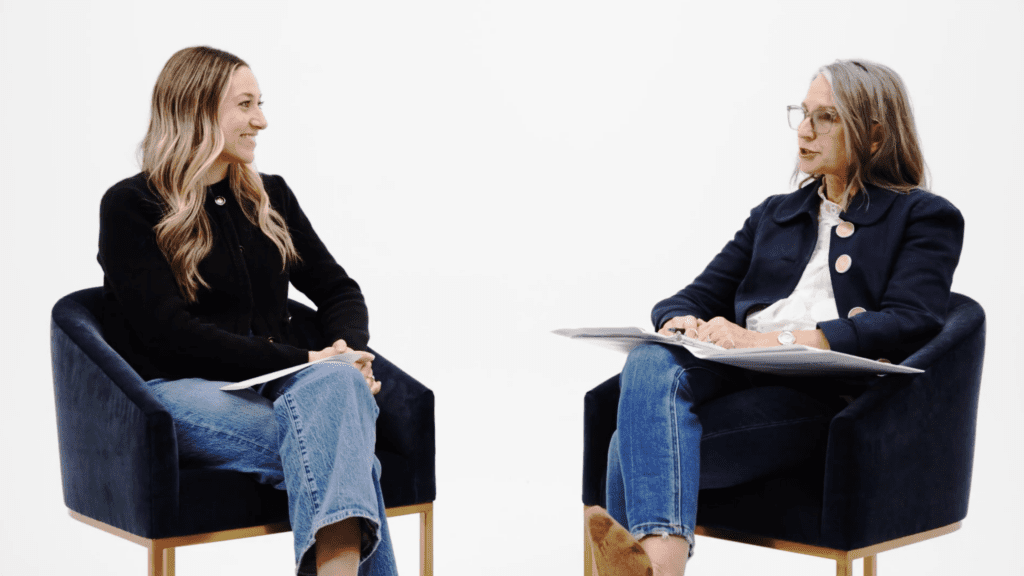
In this episode of ShowFlow, DCE Productions’ podcast on event production and business problem-solving, host Samantha Golden sat down with Leslie Bateman, Partner Services Director at Family First, inside their Tampa, Florida headquarters. Their conversation covers an inaugural training conference and a rolling timeline that kept shifting. It also covers what it really means to hand off an event to someone you trust completely.
Family First and the All Pro Dad Story
To understand why this conference mattered, you have to understand what Family First does — and how deep the roots of their fatherhood work really go.
The organization’s All Pro Dad program traces back to Hall of Fame coach Tony Dungy and Family First founder Mark Merrill. Noticing that fathers on his coaching staff were struggling to find meaningful time with their kids, Dungy had a simple idea: open a spring practice to dads and children. There was no social media and no marketing campaign — just a word-of-mouth invitation.
Four thousand dads and kids showed up.
That moment revealed something important: fathers wanted to be more present, they just needed a structure to make it happen. All Pro Dad became that structure. Today, the program offers a daily fatherhood email (the most widely read of its kind). It also provides a monthly chapter program with character-based curriculum and stadium events that bring dads and kids together in communities across the country. Over 125 of those events have been held nationwide.
This track record is what led the Florida State Legislature to invite Family First to apply for the Responsible Fatherhood Initiative RFP. They won. And with the grant came a new challenge: training more than 40 nonprofit organizations across Florida. All of them had to deliver on the program’s mission.
Why an In-Person Conference Became Essential
The grant itself called for a large-scale media campaign and technical assistance to grantees — organizations ranging from household names like the Boys and Girls Club to small, scrappy nonprofits that had been bootstrapping fatherhood mentorship for years on their own.
What wasn’t originally in the proposal? A live training conference.
But the people who knew this space best gave clear advice: these organizations need to meet each other in person. Face-to-face connection, peer learning, shared context — those things can’t be replicated in a webinar or an email thread. So Family First said yes, and then faced the reality of executing it.
“We knew we didn’t have the staff to do that,” Leslie said. “We knew we needed it completely turnkey.”
Leslie’s first job out of college had been running a national conference. She knew exactly what it took — and she knew her team didn’t have the bandwidth to pull it off alone. So she picked up the phone and called DCE.
What Turnkey Event Planning Actually Means
DCE Productions’ turnkey event planning is designed for exactly this kind of situation. An organization with a clear vision and real business goals, but without a dedicated internal events team to bring it to life. The scope covers everything from venue and vendor selection to branding, website design, attendee communications, registration management, day-of logistics, and even on-site execution.
For Family First’s inaugural conference, that list expanded to include naming the event itself, developing the conference brand, designing the flow of the day, and facilitating icebreakers that would help 40 organizations — many meeting each other for the first time — actually connect.
The timeline was its own challenge. The conference date floated from August to October and finally landed in January. At every pivot, DCE’s team stayed ready.
“You were ready for whenever,” Leslie said. “The whole team really just jumped in.”
That kind of flexibility matters more than it might seem. For a first-time event with government partners, state funding, and dozens of grantee organizations watching, slipping a deadline isn’t just an inconvenience — it’s a credibility problem. Having a production partner that treats your timeline as seriously as you do is what separates a smooth launch from a stressful one.
The Conference Experience: What Attendees Said
When the day arrived, something became clear almost immediately: people didn’t want to leave.
The event brought together executive directors and program staff from organizations across Florida — a genuine cross-section of everyone working to strengthen fatherhood and mentorship in their communities. For many of them, it was the first time they had been in the same room.
The peer-to-peer learning that emerged was something no webinar could have produced. The energy carried from the first evening’s event through the next day of training sessions. Post-event surveys reflected what the room already knew — responses were, in Leslie’s words, “off the chart.”
Beyond the program itself, the lighting, the music, the flow of sessions, the way registration was handled from the moment attendees walked in. DCE’s team didn’t just manage logistics backstage — they were present throughout, acting as an extension of Family First’s own staff.
“Your team helped with registration, signage, the technical setup,” Leslie recalled. “You all really worked as an extension of who we are and represented us well.”
That last part — represented us well — is worth sitting with. For a nonprofit hosting a state-funded conference with government partners in the room, including a deputy secretary from the Florida Department of Children and Families, perception and professionalism are everything. The event didn’t just meet expectations. According to Leslie, it exceeded them.
Planning the Next One
The Responsible Fatherhood Initiative grant runs for three years, which means the conference isn’t a one-time event — it’s a recurring commitment.
“You already know what we need,” Leslie said. “I love that you give us a variety of styles and locations and bring insight into how this conference needs to run.”
That accumulated knowledge is one of the underrated values of a long-term event partnership. You don’t start from zero each time. You build on what worked, improve what didn’t, and arrive with context that no RFP can fully transfer.
The Bigger Picture: Events as Mission Delivery
What Family First’s story illustrates so well is that for nonprofits, events aren’t just logistics — they’re mission delivery. Getting 40 organizations in the same room, helping them learn from each other, giving their leaders tools to serve dads and kids more effectively: that is the work. The conference was the structure to make it happen.
That’s why turnkey event planning for nonprofits exist. Not every organization has a full-time events team. Not every great mission comes with an in-house production department. But when the stakes are high a conference has to work the first time and every time after – that’s why having the right partner in your corner makes all the difference.
Family First didn’t just pull off a successful inaugural conference. They built a foundation for something that will grow and improve for years to come. And they didn’t have to figure it out alone.
ShowFlow is a podcast by DCE Productions exploring how event production solves real business challenges — one event at a time. Subscribe wherever you listen to podcasts or visit dceproductions.com to learn more.